Monday, January 30, 2012

Excerpts: The Effortless and the Arduous Vol. IV: CREATING A MULTI-LAYERED CHARACTER

I believe strongly that there is no such thing as the ‘perfect’ hero and that there exists no completely evil villain. But creating characters with pale hints of their dark and light sides is often the most intricate writing an author must craft; there is, after all, a fine line between love and hate. But, with one my degrees—psychology—and a complicated life of my own, there are two absolutes that I have learned that I put to use in each and every one of my books: we are very much a part of what we have experienced and we most assuredly have a choice to live by such influence, or break free from it.

Geneviève Gravois, the main character in To Serve a King, is a perfect example of a highly complex, many layered character. Here I offer an excerpt that gives a glimpse into this multifaceted enigmatic personality.

******

Knocking with one knuckle, Geneviève entered the dark, cavernous room. Diffused light from gaps in the curtain were too feeble to reach the high vaulted ceiling or the far corners of the large and stately room. The cherry wood panels and deep maroon wall and bed coverings brought more gloom upon the somber chamber. The silence hummed and Geneviève tiptoed into it, having no care to disturb it.

As she neared the bed, she spied the small mound of her aunt beneath the heavy covers and the large form of the black-gowned physician propped in the chair beside her. The bitter scent of illness mingled with the aroma of herbs in the stifling room in dire need of an airing out. Surely, a tiny bit of fresh spring air would do the dying woman no harm, Geneviève thought as she neared her aunt, but she kept such thoughts to herself. She gave the doctor a nod and he returned her solemn greeting with a silent, seated bow.

Geneviève approached the bedside and leaned forward, thighs brushing against the hard mattress upon which her aunt lay. The woman’s sharp features were hidden in the dimness, but as Geneviève’s eyes adjusted to the gloom, the familiar pointy nose and jutting chin became visible. Though death marched near, there was little softness to the bony face, as if the woman greeted it with the same stony demeanor in which she had spent her life. Thin gray strands of hair lay on the pillow and thin, papery lids lay closed over her eyes.

Lengthy minutes ticked by but the woman remained motionless. Believing her asleep, Geneviève began to creep backward to the door.

“Leave us, monsieur.” The warbled voice both startled and commanded.

The large man rose from his chair and left the room without a word, passing Geneviève, rooted to her place. It had been a test, yet another; she should have known. Her whole life had been a test, one administered by this woman with a cold, stern hand.

“Are you ready? Has everything been taken care of?”

“Oui¸ ma tante. It is all prepared as instructed.”

“Bon, bon. As it should be.”

With tremendous effort, the feeble woman lifted her head off her pillow, thin arms pushing at the mattress as she tried to raise herself up. Geneviève rushed over, taking her aunt by the shoulders and boosting the frail woman up, pulling the pillows into a heap to support her. With a sideward glance that was neither grateful nor pleased, Elaine acknowledged her niece’s assistance.

Geneviève felt her teeth grind, then released the reaction. All her life, she had tried so hard to please this woman. From her earliest memories, she had done everything asked of her. No matter how difficult, no matter how heinous, she had done it all in the hopes of eliciting some affection, any sign of tenderness, from the only mother she had ever known. But even now, as they were about to part for what may well be the last time, there was no offer of affection, not a morsel of sentiment extended from the woman who had raised her.

“In the table, there.” Elaine pointed one bony finger at the credenza along the mullioned windows. “Open the top drawer and bring me what you find.”

Geneviève did as instructed, retrieving a large velvet pouch, and placed it upon her aunt’s lap.

Untying the satin cord, Elaine reached in. “These are for you.”

The first item drawn from the bag was a book, bound in Moroccan leather with gold embossed letters on its spine: Pantagruel, François Rabelais. Geneviève accepted the book and opened it, turning the whisper-thin pages tipped in gold.

“He is the man’s favorite author, and this the most popular work of the moment. No one will question that you carry it with you always, and you must never let it out of your possession. This book holds the key. Comprenez-vous, oui?”

“I understand, ma tante, of course I understand.”

Through the long hours of lessons, of learning the languages and the ciphers, Madame Elaine had been a hard taskmaster, never once responding to the child’s exhaustion, or revulsion. She had watched with implacable neutrality as the woodsman held the small furry animals, as the young girl sobbed while exterminating them. Nor had she praised Geneviève as the young woman endured hours of lectures and mind-altering persuasion, completing each new assignment with ease, as she translated the most complex of ciphers, as she slaughtered and butchered animals without a second thought.

Elaine reached into the pouch once more. The locket hung on along golden chain of delicate links that tinkled together as her aunt dropped it into her palm.

“Open it,” the elderly woman commanded.

On each side of the open oval locket were the pictures of two faces, at once familiar, undeniably related.

“Your grand-mère and the woman who raised you. If any should question your lineage and your allegiance, we are the patent of your heritage.”

Geneviève stared at the small painted faces; the physical likeness was undeniable. She wondered if their temperaments were the same as well, if her father was the same type of person as her aunt.

It had not taken Geneviève long to understand that the coldness of this woman’s heart ran to her very core; it was not an assumed state adopted in order to coax more work from the child. It was who she was. This woman had found little chore in teaching the child to have an emotionless demeanor, for she owned it completely.

As a curious adolescent, Geneviève had tried to find out how Madame Elaine came to be who she was, but no matter how tentatively she broached the questions, no response was ever forthcoming. Geneviève would leave knowing as little about her aunt as when she came.

“Take the last one out yourself.” Her aunt held the black bag out and Geneviève took it, squaring her shoulders against the shiver. She clasped the small square shape her fingers found and brought it forth.

She knew the face at once.

“Who is it, Geneviève?”

“It is the king, François I.” Geneviève heard it herself, the slightest tinge of distaste in her voice.

“You cannot react like this, girl.” Old and dying though she may be, the noblewoman could still bark a forceful command.

Geneviève assessed herself, finding her shoulders and shapely top lip curling upward. With an inward breath, she relaxed both.

“Who is in the picture, Geneviève?”

“He is the king,” she repeated, her voice ringing with respect. “François I.”

“Whose king is he?”

Thrusting her chin up, Geneviève looked her aunt square in the eye. “He is my king. My one and true king.”

For a moment the women’s gazes locked, the teacher’s scouring the student’s. All of a sudden, the old woman broke the connection and her body slithered down the pillows. All strength had left her. Her job done, her life’s work complete, there was nothing remaining to hold her to this world. She would wallow in her illness until death came calling.

Geneviève waited, hating herself for the expectancy she felt in her heart, for one word of fondness to mark this leave-taking. Her aunt closed her eyes and turned her head toward the windows.

Chiding herself for her foolishness, Geneviève turned toward the door.

“You will tell him, won’t you?” The voice faltered and its vulnerability stopped her, drawing her back.

“Madame?”

“Tell Henry, make sure. Tell him I have done my duty well.”

That the parting words between them would be of King Henry came as no surprise to Geneviève.

“He will know, ma tante. As do I.”

Wednesday, January 25, 2012

Excerpts: The Effortless and the Arduous Vol. III, Emphasis on Arduous

Looking over my blog after speaking at a book club meeting recently, I realized two things: The first is that I have yet to post an excerpt that I would consider one of my most arduous to write. The second is that I knew exactly which one to post. In The Secret of the Glass, my second book set in Venice about the glass makers of Murano, there is a great deal about loss, my own personal loss, of all types, exorcised through the metaphor of my work. This is just a one.

********

Like hushed ghosts haunting the house, the women glided silently along the narrow passageway to the master’s bedchamber. Viviana opened the door and Sophia snuck a quick look over her mother’s shoulder.

Zeno lay on his back; in his peaceful slumber, there were no clues to the ravaging taking place within his mind and body. Viviana approached the bed, squinting in the dark to get a clear look at her husband. She heaved a heavy sigh, one almost of relief, and touched the back of her hand to Zeno’s forehead. She straightened his bedclothes, pulled the thin white sheet covering his thin body closer up to his shoulders, and sat on the cushioned rocking chair by the bedside.

Sophia watched her mother’s ritual; her sadness at her father’s approaching death changing to that of concern for her mother’s survival. He would move on to another, better place. Viviana must continue without him. She maneuvered to her mother’s side, sitting on the floor in the crook of space created by chair and bed. In the silence she heard her father’s weak breathing and behind it, the muted sounds of morning through the window behind her mother.

“I’m sorry,” Viviana said, her whisper loud in the abyss of stillness parents and child created.

Sophia looked up at her mother with a raised, quizzical brow.

Viviana’s stare remained on Zeno’s still form, though her gaze seemed fixed upon something else beyond.

“I’m sorry for how your life is unfolding, for what waits in store for you.” Her eyes seemed almost black in the pale light. “I know it’s not what you want.”

Sophia swallowed back the lump that formed in her throat, and she felt the tears threatening to bubble over. Her sadness was indiscriminate; it existed for her parents and herself. She leaned forward and rested her head against the cool sheets of her father’s bed. She felt her mother’s hand come to rest upon her back.

“There are many forms of solitude, Sophia. We must all learn to live with our own.”

The bed linens rustled as Sophia nodded against them.

“I am losing my husband. I will be a widow.”

Sophia’s head snapped up. It was the first time she’d heard her mother speak so emphatically of Zeno’s passing. Viviana’s features, captured between the curtains of her lush wavy hair, appeared less determined than usual, her eyes glistened with her tears, yet she held her chin high, unbowed by her fate.

“Yet I am still fairly young, still healthy. There may be many, many years when I walk alone.” The ghost of a smile appeared on her lips, and her low-pitched voice warbled with emotional conviction. “There can be much happiness in our own company. We are all capable of finding the joy within and, in that discovery, we find our true selves.”

In the faint light of candle glow, her mother stroked her father’s still hand with tenderness, smiling down at him as if he looked back.

“What do you think is harder, Mamma,” Sophia whispered, rising up on her knees, and touching her father’s arm, “learning to live without ever knowing true love or living with the absence of a love once known?”

Viviana mused upon Sophia’s words, her head leaning to one side in thought, a wide, fond smile forming upon her lips as she stared at her husband.

“I will have my many, wonderful memories to sustain me.” It was a bitter verdict, but true. Sophia accepted it with a silent nod.

“You have vision, Sophia, you can imagine anything you want for your life.”

Sophia almost laughed; it was as if her mother saw into her mind, saw the images of changing their fate that played within it over and over.

Her mother’s hand squeezed her shoulder. “Just believe it.”

Wednesday, January 18, 2012

WHY HISTORICAL FICTION


Writers are often asked why they write what they write. After all, the world is full of stories of every genre and type, from the literary to the superficial to the downright burnable (Snooki anyone?). So what is it that brings a writer to their particular form? In truth, it’s a question as deep as what brings one mate to another. Before giving my own particular proclivities to the genre, I thought a general look at its characteristics might be appropriate.

The easy and quickest response is that it brings a flat, anesthetized world into full dimension. I have heard so often from readers that they hated history in school but love learning it through historical fiction. To tell what George Washington accomplished is one thing; to cloth him not only in a brown wool suit but in his doubts and regrets and worries, allows the most crucial moments of the age to come alive. But herein lies the burden of the historical fiction writer, for if we were to put George in a wig instead of his own light brown, powdered and cued hair…to have him swagger with the cock-sure walk of Adolf Hitler…we would be doing a disservice to the history, the genre, and the reader.

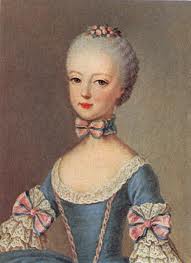
Good historical fiction reveals the truth of historical characters, neither all the good nor all the bad, as the history texts would have us know them. Marie Antoinette is known to most as a greedy, hedonistic, materialist, self-centered brat. And indeed those are characteristics applicable to one of the most popular personalities of the past. But no one is born to such physiognomies; they are brought there by either the privileges or the deficiencies of their lives. If you were taken from your home as a young teenager—stripped away from all those familiar and loving to you—forced to marry an equally inexperienced adolescent who had no clue how to love you in a land filled with people who resented your very presence, what might you become? To what methods of comfort might you turn to fill the voids of your life?

Historical fiction, when done properly, not only presents the complexities of issues but does so with multiple perspectives. In the smallest to the most major occurrences in life, there are three versions…perspective a, perspective b and that which is formed by the combination of both. What historical fiction provides is that very view of history. For far too long, only one perspective has been represented in text books, that ignominious creature I call ‘old white man’s history’. For all the accolades and plundering heaved upon Dan Brown’s Da Vinci Code, it brought many to the knowledge that gospels, other than those included in the Bible, exist. How many of them then sought out those gospels, sought out non-fiction books on the subject matter…how many of them came to have a far greater perspective on gospels and the Bible itself because of that work? What a great reward for both author and reader.

It was my ‘voice’ which brought my ‘pen’ to historical fiction. The voice of a writer is the style of their composition, that quality of it that it makes it unique to them. Because of Stephen King’s influence on my early reading, I thought I was meant to be a horror writer. My first published material was indeed short horror. But my attempts at writing a full length novel were, well, horrific, and I failed to finish a one. As my reading moved more and more into historical fiction, I ‘heard’ myself in the words. I heard the formal tone, the serious almost old-fashioned style of my sentence structure…and I knew I was home.

Why historical fiction…for me, the most compelling reason, as both writer and a reader, is that It brings to stark relief the consistency of the human experience…the struggle for survival, against poverty, in war, in socially trying circumstances, in love…and in that consistency, we find solace. We are not alone in our pleasures or our angsts; neither now nor as far back as the pen may reach. We are not alone.

Sunday, January 8, 2012

THERE WAS NO LADY GAGA IN THE RENAISSANCE


Like so much else that is wondrous and creative, the arts of the past, were a pastime for men alone. We don’t know if, as in the Regency period with its authors such as the Bronte Sisters who first published under men’s names, there were such feminine composers during the Renaissance period. But at first glance, it seems clear…there was no Lady Gaga in the Renaissance.

While Italian artists—painters, sculptors—seem to have a monopoly on the era known as the Renaissance (1400-1600), it’s musical crafters came from all over Europe. A non-believer in competition (a believer instead in the great things that humans create, whether alone or together, but never against), these musical statesmen are mentioned in no particular order (though there are many places on the web which will try to define which is the best and which isn’t).

I will put the name of William Byrd first, on the advice of my oldest son (an opera student who sings with the Boston Symphony Orchestra’s Tanglewood Chorus). My son rates Byrd (an English man, 1540-1623) at the top for the very in depth and complicated motets he wrote for all the huge churches. Byrd was also known for writing some of the most difficult and forward thinking music of his day, as well as being a virtuoso in every style already in existence. Byrd, who began writing in his teenage years for Mary Tudor, wrote well into his seventies and was praised with wonderful lyricism by Baldwin:

Yet let not straingers bragg, nor they these soe commende,
For they may now geve place and sett themselves behynde,
An Englishman, by name, William BIRDE for his skill
Which I shoulde heve sett first, for soe it was my will,
Whose greater skill and knowledge dothe excelle all at this time
And far to strange countries abrode his skill dothe shyne...


Byrd’s teacher, Thomas Tallis (1510-1585) served under no less than four English monarchs and Queen Elizabeth awarded him and Byrd exclusive rights to England’s printing press to publish music.

The French had many composers of note, not the least of which is Pierre La Rue (1460-1518) whose repertoire consists entirely of vocal music but of whose childhood no records can be found. And, though there is no certainty of where he was born (Picardy, Burgundy or the Ile-de-France are the most likely locations), Claudin de Sermisy (1495-1562) served several kings of France, including my favorite, François I.

And then there are the Italians. There is Claudio Monteverdi (1567-1643), whose revolutionary music included the first dramatic opera, Orfeo. Known as the Prince of Music, Giovanni Pierluigi da Palestrina (1525-1594) was considered one of the greatest composers of liturgical music, indeed a savior of the genre. A Venetian, Giovanni Gabrielli (1553(-6)-1612) represents the pinnacle of the High Renaissance Venetian school. And Luca Marenzio (1550-1599) was one of the most renowned composers of madrigals, writing no less than 500 of them.

Of course any discussion of Renaissance music would be incomplete without mentioning the lute, the most popular solo instrument of the age. King’s throughout Europe would vie for the best lute players to reside at their court, paying top dollar for them along with a plethora of other benefits. A lute is best described as a plucked string instrument with a neck that may be fretted or unfretted, and a deep round back, producing a silvery yet ravishing sound, a definitively romantic sound in the quixotic sense. Ironical to this article, this is one of the few instruments that women were allowed to play with frequency and one at which they excelled, though only in private.

And if Dick Clark held his Bandstand during the Renaissance, the song to take the top spot (both because “the lyrics are great and it’s easy to dance to”) would be Greensleeves. Regardless of the pervasive rumors that the song was written by Henry VIII for Anne Boleyn, it more than likely comes from the Elizabethan era. A broadside ballad by the name of Greensleeves was registered at the London Stationer’s Company in September 1580 and was described as “A New Northern Dittye of the Lady Green Sleeves”. The incorrect attribution to Henry for Anne is most likely because of the ‘green’ context, a color which held sexual connotations, i.e. a woman’s gown would be green for her having ‘rolled in the grass’ with a lover. Greensleeves, like so many songs of the time, was most often played on the lute.


"Thou couldst desire no earthly thing,
but still thou hadst it readily.
Thy music still to play and sing;
And yet thou wouldst not love me."


As in all of the creative arts, as well as the sciences, the Renaissance was an age of great intellectual and creative expansion and evolution. Oh how the mind whirls at what a Gaga—with a woman’s sensibilities and insights—might have produced.

Thursday, December 29, 2011

Auld Lang Syne: History and Meaning

We’ve all heard it, that bittersweet song sung at the stroke of midnight on New Year’s Eve. I must confess that I could never reconcile the hope of new and wonderful beginnings with this woeful tune, so I did a little research on a tradition I found so dichotomous.

The song was first published by the Scottish poet Robert Burns in 1796, but its true genesis is not definitively known. Burns published the song after hearing an old man singing it in a tavern in the Ayrshire area of Scotland. And like so many folk tunes, it could have been born hundreds of years before that. Burns himself wrote to a friend, “The following song, an old song, of the olden times, which has never been in print, nor even in manuscript until I took it down from an old man.” There is, however evidence of Burns using not only what he heard the elderly gentleman sing, but utilizing bits from other old songs, inserting some of his own talent in the places in between.


For Americans, it was Guy Lombardo who popularized the song; it became a standard offering from Guy Lombardo and the Royal Canadians, but was first played by the band in the states at a New Year’s Eve party, at the stroke of midnight, at the Roosevelt Hotel in New York City.

But the magic of the song, the ability to touch even the coldest heart, has traversed the globe. Songs based upon the melody, and the underlying meaning of the song, appear in France as “This is just a goodbye, my brothers (Ce n'est qu'un au revoir mes frères) and is sung at moments of great farewell, as it is in Peru, Germany, Greece, and Chile. In Hungary and Japan, it is a popular graduation song. And in Taiwan, it is used as a funeral song.

The genesis revealed, the song itself remains, still, an enigma for most people. The title can be translated in a variety of ways to bring the singer to a heartfelt meaning. The literal translation is, “old long since.” But that doesn’t help much. If more idiomatic translations are used, it flows through to, “long, long ago,” “days gone by” or “old times.” Singing the first line of the chorus, “For Auld Lang Syne” is, in essence, singing, “for the sake of old times.” Ah, finally, a sentiment in keeping with the moment. As we raise our cup “for the sake of old times,” we are promising to remember those who have passed with kindness. But if we look a little more deeply at the translation, we find a stronger sentiment, one of hope, one of dedication to those who are with us in this moment.

Scottish Verse (Translation)
Should auld acquaintance be forgot, (Should old acquaintance be forgot,)
And never brought to mind? (And never brought to mind?)
Should auld acquaintance be forgot (Should old acquaintance be forgot,)
And auld lang syne. (And long, long ago.)
Chorus

For auld lang syne, my jo, (And for long, long ago, my dear)
For auld lang syne, (For long, long ago,)
We'll tak a cup o' kindness yet, (We’ll take a cup of kindness yet,)
For auld lang syne. (For long, long ago.)

And surely ye'll be your pint-stowp! (And surely you’ll buy your pint-jug!)
And surely I'll buy mine! (And surely I’ll buy mine!)
And we'll take a cup of kindness yet, (And we’ll take a cup of kindness yet,)
For auld lang syne. (For long, long ago.)

(Chorus)

We twa hae run about the braes (We two have run about the hills)
And pu'd the gowans fine; (And pulled the daisies fine;)
But we've wander'd mony a weary foot (But we’ve wandered many the weary foot)
Sin auld lang syne. (Since long, long ago.)

(Chorus)

We twa hae paidl'd i' the burn, (We two have paddled in the stream,)
Frae mornin' sun till dine; (From morning sun till dine;)
But seas between us braid hae roar'd (But seas between us broad have roared)
Sin auld lang syne. (Since long, long ago.)

(Chorus)

And there's a hand, my trusty fiere! (And there’s a hand, my trusty friend!)
And gie's a hand o' thine! (And give us a hand of yours!)
And we'll tak a right guid willy waught, (And we’ll take a draught of good-will)
For auld lang syne. (For long, long ago.)

So what has my research into this tradition truly revealed? For this humble author, who has learned more than her fair share of life’s lessons, it is this, and to you all I wish…


That the calluses of your life be rubbed away;
That the beauty of your life find a place in your heart,
and are remembered from day to day.
And may the road that stretches out ahead,
be filled with nothing but kindness instead.

Happy New Year to one and all

Tuesday, December 20, 2011

Christmas: Of Days Gone By

As we surround ourselves with the good cheer of the season, its difficult as a writer of historical fiction not to ponder on Christmases of years past. As I have a knack for picking events that seem to occur during warm weather months (most definitely a Freudian coincidence), it seems fitting to delve into the winter months and the crowning glory of the season.

As any devotee of history knows, it is more than likely that Jesus was born sometime in May, not December, but this is knowledge gathered in modern times with devices and techniques unavailable until a few decades ago. It leaves one to wonder, then, how did December 25th come to be the celebration date of that momentous birth. The most logical explanation brings one to the Mithric Mysteries.

An enigmatic religion practiced most popularly from the 1st to the 4th Centuries in the Roman Empire, the name of Mithras appears to represent that given to their one god. The religion itself, while highly complex and distinctly popular with the Roman Military, shares a great many coincidences with Christianity. Baptism, communion, guardian angels are just a few of the similarities. But their celebration on December 25, the Birthday of the Unconquered Sun, is almost a mirror image of traditions still in practice today. Believed to be born of a virgin woman, the myth of Mithras includes resurrection after death and the ascension to heaven in human form. It is all this, and more, which no doubt induced Emperor Constantine and the Council of Nicea to choose this date in 325 AD to commemorate the birth of Jesus.

While it’s probably a good bet that fine spirits of the liquid variety have always been a part of these celebrations for times untold, the activities themselves have evolved in a number of ways. The early celebrations of Christmas, in Italy and all through Europe, more readily resembled Twelfth Night and the luxuries discussed in the Twelve Days of Christmas, a festival lasting from December to the Epiphany, on January 6. As these days were also fraught with the constant battle and persecutions between the Protestants and the Catholics, it’s safe to assume that there were many years and many families who kept such celebrations on a quiet, more intimate tone, though even the Medicis themselves were known to take part in the festivities at various times, playing the parts of the Magi in the Mystery Plays.

The one constant from the Renaissance era and the celebrations of Twelfth Night that remain today (dare I say almost to our detriment) is the custom of gift giving, a tradition instituted to mirror the gifts of the Magi given to the baby Jesus. Christmas Carols began in the 15th Century by Saint Francis of Assisi, who also introduced the tradition of a Manger when he created his own with the use of living livestock.

However you may celebrate, from wherever your traditions may come, may we all remember the true message of the season…Peace on Earth, Good Will toward All Beings.

Friday, December 16, 2011

A Palace for the Ages: Le Louvre

In To Serve a King and next year’s The King’s Agent, much is mentioned about Francois I’s obsession with acquiring the eras greatest works of art, as well the artists. In each case, I credit Francois and the lead factual character in The King’s Agent, Battista della Palla, with launching the collection that would become the superior compilation of masterpieces now housed in the magnificent Louvre. But what of the palace itself?

In the late 12th century, Paris was Europe’s biggest city, blossoming under the forty-three year reign of King Philippe Auguste, as did the monarchy’s own power and influence. But such greatness is often accompanied by jealousy and other rulers of the day coveted the city as they would the world’s most beautiful woman. Before leaving for the Crusades, King Philippe had a rampart built around Paris. To reinforce its defenses, the king erected a fortress as well; the high walls and imposing edifice constructed along the right bank of the River Seine formed an imposing edifice and protection for the city’s populace. That fortress came to be known as the Louvre, the name most credibly noted as deriving from the Latin Rubras, meaning ‘red soil.’

In those early days the single building structure was used as a prison, armory, and a royal treasure stronghold. Round bastions stood at each corner and at the center of the north and west walls of the mounted quadrilateral measuring seventy-eight by seventy-two meters. In the south and east walls, defensive towers flanked narrow gates.

By the 14th century and the inception of the Hundred Years War, even greater defenses were called for and construction of an earth rampart was prompted by Etienne Marcel, provost of the merchants of Paris. The work was completed under Charles V. With the addition of this rampart to the city’s defenses, the fortress became superfluous and it began its transformation into a royal palace. With much of the design work by architect Raymond du Temple, the fortress became resplendent with ornately decorated rooftops, elaborately-carved windows designed to bring more light into the structure, and interiors sumptuous with paneling, tapestries, sculptures and other works of art. The grandest addition, the grande vis, was a breathtaking staircase adorned with sculptures of the royal family.

After the death of Charles V in 1380, the renovation of the Louvre slowly ceased, the country’s coffers diminished by the strain of war and the plethora of other royal residences requiring upkeep…la Bastille, Vincennes, Fontainebleau. The work honoring the magnificent structure known as the Louvre would not again be honored until the reign of François I.

What came first…François’ love of art and his need for a fitting palace in which to flout it, or a magnificent palace longing to be festooned by resplendent art? When the king, returned from years of imprisonment in Spain, scarred—physically and mentally—by resounding defeats on the battlefield and in the political arena, he decided to make the Louvre the official royal residence and the true renovation of the medieval fortress began. François found the castle dark and airless, much like the rooms of his prison, which no doubt instilled an even greater need for restructuring of the mansion he would call home. The great tower was destroyed and the medieval fortress gave way to the Renaissance palace.

This demolition marks the true turning point of the essence of the palace, as the old gives way to the new, as the king eradicates the west wing and replaces it with distinctly Renaissance style structures designed by Pierre Lescot and decorated by Jean Goujoun. The encompassing renovation began in 1546, but Francois’ death a year later would find the work continued by his progeny.
And continue it they did, with great relish. Under Henri II and his son, born Charles IX, ruling as Henri III, the palace was transformed. A new façade, the King’s Pavilion, and a new dungeon overlooking the Seine are but a few of the major points of the renewal

As regent to her son Charles IX, Catherine de’ Medici had the Tuileries Palace constructed, a pleasure palace which remained unfinished as her relish for luxury emptied the kingdom’s coffers. Henri III directed work on the Little Gallery, a jumping off structure for the connection between the two buildings. Under his son, Henri IV, The Grand Hall, built between 1595 and 1610 was constructed along the water that directly connects the royal apartments at the Louvre and ending at the Pavilion de Flore of the Tuileries. Stretching 450 meters, the Grand Hall is crowned by the Hall of Kings on the floor above.

The assassination of Henri IV by Ravaillac, a religious fanatic, put the expansion on hold for many years, until his son came to reign. Under the ‘modern’ Louis kings, more demolition of old buildings would take place and the Louvre compound would expand four fold. But the trauma Louis XIV endured while within the walls of the Louvre—a cold and ignored childhood, an attempted coup by the ranking nobility—turned him against the palace and toward Versailles, where the French royalty would live out the remainder of their usefulness.

For more than a hundred years, from 1670 until the French Revolution, the Louvre served not only as the state cultural and learning center, but as a city for artists and their families. It is during these years that the palace makes its most important transformation, into the artistic mecca that it is today, officially becoming Le Museau Central des Arts in 1793.

Today the Louvre is the largest art museum in the world, housing approximately 35,000 pieces of every medium, art of such a precious nature that, during both World Wars, the French government removed all its masterpieces and hid them. To this day, the hiding place is unknown to all but a few chosen members of the French government...should the need for its secrecy ever arise again.


And in the walls of this royal bastion, in between the stones and the bricks and the marble and the splendor that is the Louvre, resides the history of a nation and the passion of its kings.