Sunday, August 26, 2012

Goodreads Book Giveaway

The King's Agent by Donna Russo Morin

The King's Agent

by Donna Russo Morin

Giveaway ends September 24, 2012.

See the giveaway details at Goodreads.

Enter to win

Thursday, August 9, 2012

THE MISERY AND THE MAGNIFICENCE OF THE SISTINE CHAPEL

“It was an ascension that felled me, I assure you.”

So said Michelangelo in The King’s Agent, a paraphrasing of the artist’s own words taken from his letters and his verse. The Sistine Chapel was, perhaps, Michelangelo greatest creation and yet he himself would deny it, not only because he was, in his heart and soul, a sculptor first and foremost, but because of the trauma he suffered in the completion of the work on the chapel, trauma both physical and mental.

In March of 1505, Michelangelo was called to Rome by Pope Julius II. Their first meeting came just after Michelangelo’s completion of the monumental work, The Madonna of Bruges (1501-1504, pictured from my own moment standing before it). These two dynamic men shared many characteristics. Both could-rightly and justly—be accused of, to use a modern phraseology, too much multi-tasking. Both men were such innovators they were relentless in their ideas and projects, much to the detriment of each idea, for the men often scattered their attention among the ideas as opposed to focusing on one at a time. “The first years of their friendship were a feverish delirium of plans.” (The Extraordinary Life of Michelangelo, Romain Rolland).

When Pope Julius II (pictured, National Gallery, UK), renown for his patronage of the arts and his ambitions building projects, called Michelangelo to the Vatican he initially commissioned the artist to sculpt statues for Julius’ own tomb, preparing a magnificent monument for himself before the possibility of his demise. It was a project which thrilled Michelangelo, incensed him so much he went into the mountains of Tuscany to personally select the marble for the work.

But the pope became impatient with the slow work that is inherently sculpture and his mind moved on to something else, something that some theorists say was implanted in his mind with the specific purpose of taking Michelangelo away from the medium at which he so excelled. Pope Julius was advised that to assure his immortality, he should revitalize the deteriorating St. Peter’s Basilica. Without thought for the artist’s own sensibilities, the pope pulled Michelangelo from work on the tomb .

Michelangelo himself wrote, “all the difficulties which arose with the pope and myself were the work of Bramante and of Raphael. It was their jealousy which kept him from having his tomb made while he was still alive. They tried to ruin me. Raphael had good reason for doing this, since all that he learnt of art he learnt from me.”

So heartbroken was Michelangelo, so devastated was he, that he fled Rome in the middle of the night on horseback, fled to his homeland of Florence. It took months of beseeching letters and messages before Michelangelo would return to the good graces of the Holy See; there was much capitulation, an apology, and another project begun—a bronze casting for which Michelangelo had no expertise--before he would take up the monumental task laid before him. A painting commission he would accept despite his best efforts to convince the pope that Raphael was the man for the job, to no avail. But even then, he truly had no concept, nor did the pope, of what was to come, both in terms of work and results.

Work on the Sistine Chapel began on May 10, 1508. The original design called for the representation of the 12 figures of the apostles to be created in the lunettes (a crescent shaped opening in a vaulted ceiling) and to fill the rest of the space with decoration. Bramante, the basilica’s architect, raised scaffolding and hired several fresco painters. But Michelangelo could only work alone. He replaced Bramante’s scaffolding—such as would cause holes in the ceiling—with one of his own design, and sent the painters away. For the next four years, he remained shut up with but a handful of workmen, such Giovanni Michi from Florence, and enlarged the scope of the project to including painting the walls down to the old frescoes.

As many have said, to analyze the work is to kill it, but perhaps none have said it as lyrically as Romain: “We must face the vision squarely and lose ourselves in the abyss of that spirit. It is terrifying and, if regarded calmly, incomprehensible—it must be hated or adored. It stifles and excites; there is no nature, no landscape, no atmosphere, no tenderness, almost nothing human; the symbolism of a primitive and the science of a decadent; an architecture of naked convulsed bodies; a barren, savage and devouring thought, like a south wind over a sandy desert. There is no corner of shade, no spring to slake the thirst; it is a whirling spout of fire, the vertigo of a delirious emotion, with no goal except the God in which it loses itself. The whole calls on God, fears Him and proclaims Him.”

Through the long days, months, years, Michelangelo barely ate, he lost all thought save for the ceiling, sacrificed his very essence to the work. As is the way of all artists, he questioned the very value of the work, suffered the war of art perhaps far more than anyone has ever done before or since. He battled those who would see him fail, illness, and his own self-doubt, one so consuming, he almost fled again. And, as myth portrays it, Pope Julius became impatient with the artist and the time the masterpiece was taking to be completed. The pope would ask him when he would finish and Michelangelo would answer, “when I can.”

That day finally came in October of 1512. Michelangelo would not paint again until 1529.

Friday, July 20, 2012

VENICE: ITS BIRTH AND IMPENDING DEATH

Noon on the 25th of March 421.

Many believe it is on that date, at that exact time, that the Venetian Islands were born. In truth, the little islets of sand and coachgrass had been forming for hundreds of years. The two hundred square miles of salt water, most only waist deep, that criss-crossed with deeper channels became studded with shoals formed by silt that the Brenta, Sile and other, far greater rivers like the Po and the Adige brought down from the Alps. It was an ecological event of the most natural kind.

The first settlers to this strange conglomerate of land came out of fear. Privileged, cultured people either from Illyria or of Antolian stock were living prosperous lives in a sparkling row of cities belonging to the Roman Empire, cities like Concordia, Aquilia, Padua and Altino. Living well…until the Barbarians came. When the Goths under Alaric swept down in 402, these people fled to the strange lumps of ground that sat waiting for them in the sea. There they found sanctuary, but more, they found life in a magical wonderland so to their liking, they never left.

It is in the days of March 421, as consuls from Padua established a permanent trading post on Rialto (one of the largest islets), that historians consider the birth of Venice. It was an event celebrated by the raising of a church dedicated to Saint James, a legend that lies at the root of the claim of the church of S. Giacomo di Rialto as the oldest in Venice.

When, just a few years later, Attila the Hun attacked Aquilia for three months and devastated the city, more refugees flocked to the islands, and the communities grew and began to prosper. The ingenious population built some of the most glorious palazzos and buildings known to man, built upon pilings, large wooden posts driven into the ooze that was the land, so close together they formed a supporting platform, a foundation of sorts, with their sawn-off tops.

Through countless wars with other countries, other Italian states and even the Vatican, Venice has survived and thrived as one of the world’s most beautiful places, a bounty of artistic and cultural magnificence.

It wasn’t until deep into the research for my second book, The Secret of the Glass, that I learned that Venice was dying, sinking into the very waters in which it had been held dear for so long. For the last thousand years the islets have been sinking at an average rate of seven centimeters per year. With the addition of global warming, some recent statements have reported a drop of up to twenty-four centimeters in the last century alone. In March of this year, a report from NBC News reported that not only is Venice sinking, but it appears to be tilting as well. According to measurements taking over the last ten years, the islands are moving eastward a millimeter or two per year. And while a series of dams are nearly completion, built to address the sinking problem, this new research calls into question whether or not these efforts will be enough.

What has drawn me back to Venice, back to the glorious land that captured my mind and my heart a few years ago, was a recent article in The Guardian, which, in essence, sites yet another threat to this magnificent place, one as insidious and dangerous as the Goths themselves…greed.

Despite the efforts of UNESCO (United Nation Educational, Scientific, and Cultural Organization) cruise ships continue to force themselves up the canals of Venice. According to the Guardian article, the head of the local council, Giorgio Orsoni, worries about "the damage to the city's foundations from ships passing through the Giudeccia canal, only 10 metres deep. The water they displace acts as a pump for the seabed, shaking even the San Marco basilica".

As stated so well by Francesco Bandarin, UNESCO assistant director general for culture, “"Above all we must think in terms of heritage. The city is an icon.”

For more information on saving Venice, please visit UNESCO (http://www.unesco.org/new/en/) and Save Venice (http://www.savevenice.org/).

Pictures in order of appearance: The Piazza San Marco with the Campanile and the Doge’s Palace; San Marco Basilica, The Rialto Bridge

Saturday, July 14, 2012

BASTILLE DAY: POWER TO THE PEOPLE

He was already an impotent figurehead of all the injustices wrought by those who came before him, yet in May of 1789, Louis XVI sat before the Estates-General to hear their grievances against the monarchy. At the time, France was divided into three ranks…The First estate represented the Catholic Church, the king and his court comprised The Second Estate and the Third Estate—the largest of them all—represented the people, most specifically the poor. Simply stated, the revolution was incited by the hundreds of years of oppression of the Third Estate by the Second, by the lack of representation, by the inability to better one’s station, and at the end, fueled most ferociously by the economic crisis that hurtled even more of the population into poverty.

Could Louis and the Second Estate have avoided the inevitable? Possibly. He did, during the Estates-General meeting, to institute taxes upon the Second Estate, an act never before attempted. His efforts failed epically; his nobility turned their back on him. Louis XVI was, at heart, a weak leader, an insipid person, who had neither the courage nor the inclination to fight the nobility or undo what had been done by the many Louis’ that had come before him. Though inevitably, it was this laissez-faire attitude which sealed his fate. Before he could lose all power, Louis canceled the assembly. He could not have instigated more acrimony with one act had he intended to do so.

The power behind the Revolution, men by the name of Robespierre (pictured), Mirabeau and Sieyes, gathered in an assembly of their own, a makeshift meeting inside an indoor tennis court in the city of Versailles. There, on June 20,1789, the Tennis Court Oath, was taken by 576 of the 577 members of the Third Estate proclaiming "not to separate, and to reassemble wherever circumstances require, until the constitution of the kingdom is established". Powerful in language and its meaningful implication unto itself, it was the first time in the country’s history that the French people stood in political opposition to Louis XVI. It was THE turning point, but July would prove to be the hottest month of all.

On the 12 of July, the king dismissed Jacques Necker, the very popular Minister of Finances. On the 13th, a scurrilous rumor spread through the streets of Paris that Louis planned to attack the newly proclaimed parliamentarians.

The Bastille, once a fortress, for centuries a dark, imposing structure that symbolized in its guise as a prison, for all that was injustice in France. It was at the base of this fortress that on the morning of July 14 a group of craftsmen and merchants stool 28,000 rifles, but there was no powder to be found. The guards—no more than 30 in all, comprised of veterans and Swiss grenadiers—were unimpressed. Their leader, one Marquis de Launay, hoping to hold off the revolutionaries until the expected rescue team could arrive, invited representatives of the gathering in to the Bastille. Negotiations ended as members of the mob charged the prison. The meager group of guards fired, killing hundreds. Yet how very disappointed the Marquis must have been when the rescue team arrived…only to stand with the revolutionaries. With their numbers, their power, and their canons, it was but a matter of hours before they asserted victory over the guards.

By 4 in the afternoon the Marquis surrendered, but it was not an act that would save him. Though only seven prisoners were freed—those constituting the entirety of the prison population at the time—all the guards were killed and the Marquis himself were beheaded. The Bastille itself died later that night when more than 800 hundred men destroyed it.

When, years later, King Louis XVI’s diary was found by historians, his only notation for the day read, ‘nothing,’ in reference to his success at the day’s hunt.

“Is this a revolt?” Louis asked the Duc de Liancourt when the noble informed the king of the day’s events at the Bastille.

“No, Majesty,” the Duc replied. “It is a revolution.”

Thursday, July 5, 2012

CHARACTERS ARE THE SOUL OF THE PLOT; PLOT IS THE RECEPTACLE OF THE SOUL (INCLUDING EXCERPT FROM THE KING'S AGENT)

That’s the answer I give whenever asked the timeless question, “which is more important, character or plot?” And invariably I get a look of skeptical confusion. But to be truthful, we must recognize that not only can one not exist without the other, but that one cannot be successful without the other…a good character can not carry a book without a stirring story to breathe in.

When we fall in love with a character, it is not only his or her instinctive traits that endear them to us, but their responses to the situations in which they find themselves. Quite frankly, Scarlett O’Hara (one of my favorite heroines of all time) would simply have been deemed a demanding diva if she acted the way she did under normal circumstances. If the war hadn’t broken out and if her struggle did not become one of survival for herself and her family, she would have become a character worthy of reality show depiction and abhorrence.

La Madonna Aurelia, the protagonist of my recent release, The King's Agent, is a woman 'larger than life' and, without proper development and well-deserved empathy, would not have been believed at all. And yet she is fast becoming one of the most popular characters I've ever created.

Like Scarlett, Aurelia is flawed but for all those flaws, revered for her honor and her motivation. Yet it is despite these flaws, and because of them, that she is able to serve both herself and her duty.

During the research process for my historical novels, I know I’ve hit upon a noteworthy time in history when life altering events occur one after the other. At the end of the writing process, I realize I’ve created a character worthy of readers’ attention when I begin to miss her as soon as I’ve typed ‘the end.’

To the great characters that have been drawn by the mighty pen of writers throughout time, I raise my glass. And to the vagaries of life, both harsh and harmonious, in which they reside, I take a giant swig.

And as we toast, here's a glimpse of The Lady Aurelia:

“I am in your debt, Signora…?”

“Aurelia,” she responded, prying her gaze from its study of the palazzo, scanning the space between for any guards who may have picked up their trail. But the small expanse of farmland was empty of all save the budding shoots of spring growth and the packs of scavenging guards headed out along the roads, not into this forest that would lead a stranger to naught but a cliff and a fatal drop to the river below.

His thick brows rose on his smooth forehead. “Aurelia? It is just…Aurelia?”

“The Lady Aurelia.” She sat down beside him, offering as skeptical a glance as she received. “It is enough.”

He laughed then, a low, sultry purring. “Very well then, Madonna Aurelia. I am Battista della Palla, and I owe you my life.”

Battista lifted her hand off her lap and brushed his lips across it. She smiled at him as she would at a mischievous yet indulged child.

“Yes, you do.” Aurelia longed to laugh as well, at him and his devilish charm, at what she had done, at the thrill of the unknown stretching before her. Her wishes had come true and she would suffuse herself in every serving of it like a fat man at a feast.

With keen observation, she took in their position, the activity visible at the palazzo, and the condition of the man beside her.

“Where is your horse? Where are your men? You have not come to this errand alone?” She frowned at him, at such a ridiculous notion.

Battista stared up at the sky above and smacked his lips. “No, I did not come on this journey alone. But my companion, with my horse, is long gone by now I presume. Or he had better be.”

It was her turn to raise a skeptical brow and he capitulated beneath it.

“I’m not sure if the agreed-to time has passed, or if he heard the alarm.” He shrugged as if his situation were of no great consequence. “In either case, he would have taken himself away, saved himself as it were. It has been our agreement for the whole of our lives.”

“Oh, I see,” Aurelia stated with biting succinctness. “Then you are a habitual thief?”

“How dare you, woman!” Battista blustered with outrage, but one only slightly sincere. She saw his amusement in the smile that narrowed his eyes. He tipped his body closer to hers, slipping sideways along the trunk holding their backs. “I am an art dealer, and a highly res…ected one at that.”

She smiled at his slurred protest. His handsome face, now no more than inches from hers, revealed his fatigue and weakness and her amusement faded.

“If I am forced…into thievery…” –his head slumped farther still, until it came to rest upon her shoulder, his words slithering through lips no longer moving— “…then I do…whatever…God will forgive me.”

His last argument—prayer—uttered, Battista lost consciousness, full weight once more falling upon her.

Aurelia shook her head in a wonder. A penitent thief, a religious rogue…of all the men to encounter, of all the creatures on the earth to indulge her capricious desire, she had to choose such an irresoluble person.

With a gentle touch, she lifted his head, shimmied out from under him, and laid him down upon the soft pine needles, bunching his cape beneath his head. She scurried on her knees to his legs, squinting in the dimness at his wound. The dark stain of the makeshift bandage had become moist; the wound still bled and required another wrapping. Her appraising gaze latched onto his satchel, and she snatched at it, sitting back off her knees as she pulled it onto her lap.

Aurelia’s groping hand found smooth metal first, and she pulled out an engraved, finely wrought flask. She shook it and received the heavy gurgle of a full flagon. She pulled out the cork with a pop and touched the opening to her lips, nose curling, shivering at the strength of the libations dripping down her throat. She put the stopper back in the container, but kept it out of the sack; she would use more to clean his wound.

A bundle of rope, a pouch of metal rods—tools of some sort—and two pieces of well-worn flint; the man was indeed prepared for anything. His vigilance served him well. In the meager light, Aurelia unwrapped Battista’s wounded leg and dribbled some of the powerful liquid onto the raw, bloody slash about two inches in length. The man flinched and thrashed a bit, but didn’t regain consciousness and Aurelia rewrapped the leg with a linen also found in the sack, its unknown dried meat removed and set aside. The ministrations had an instant effect; Battista calmed, breath growing deeper as he lapsed into a heavier rest.

Aurelia sat back down, resting once more against the curved trunk. In the distance, she heard the refrains of orchestral music; the party carried on, as she knew it would. The marquess’s guards would have done their jobs well, containing the alarm, dousing the fire, secreting the search so as not to disturb or inform his guests. Only the nobleman would know of the intrusion. The pine needles beneath her pricked her skin as did her guilt for the worry she caused.

The man beside her snuffled in his sleep and Aurelia smiled at the silliness of it, the expression feeling peculiar but pleasing.

They dare not dally too much longer, for night would soon make its way to day. But if he didn’t rest a bit, he might not make the journey to…wherever they might be bound. The thought of sleep impossible, every nerve in her body tingled with heightened alert; she hummed with the adventure in her grasp, unable to temper the mix of joy and fear thrumming through her.

Reaching out, Aurelia pulled his satchel close once more. True, she had found all she needed, but perhaps there were other items of value, or so she told herself, arguing against her own chiding conscience.

Her fingers curled around a parchment and she pulled it out. Aurelia could see the slanted lines and twirls inscribed on it, but not the words themselves. Her head tilted as she studied it, at the oddly familiar curve of the letters. She had seen this hand before.

Aurelia held the parchment out, then up, searching for a patch of unfiltered moonlight. She stood, saw the beam of illumination wafting upon the patch of forest a few steps to the left, and with another tinge of guilt untied the bow as she made quickly for it.

In the pale gray light, the unfurled parchment revealed its secrets.

Aurelia wanted nothing as much as to deny them with a scream. She read the words, now convinced of which hand had wrought them, and read them again. Not one to welter in anger for all she may be constantly piqued at the marquess, but in this she found a wealth of the disturbing emotion. How could he not have told her that this revelation, and what it led to, still existed? How could no one have told her? How could nothing have been done?

Aurelia’s hand, and the parchment in it, fell to her side.

Battista groaned in his sleep, her head snapped toward the forgotten man. Who was he and what was he doing with this? She wavered between the thought that the parchment changed everything and her much-believed conviction that nothing happened without a reason. She could destroy the parchment, but it would only be an impermanent repair.

No, she shook her head, vehemence tossing her now-scattered chestnut curls further asunder. No, she had arrived at this moment for a purpose; the fates had brought her exactly where she needed to be. How many wars were won by those who kept their enemies close?

Aurelia returned to the man’s side, rewound the scroll, tucked it into her palm, and sat down to wait.

Thursday, June 21, 2012

THE GHOSTS OF LUCEDIO ABBEY, TRINO, ITALY

Light begins to run from you as soon as you step under the round arched cupola of ochre stone that guards the entry. The unpolished, rough-hewn wood door closes slowly behind you, whether you want it to or not. Turning left you enter the long, seemingly endless corridor that leads away from you with no end in sight…perhaps to an evil infested eternity. Your footsteps scratch along the grit and sand of the thousand year old stone floor as you enter into the darkness, the great stone pillars connected by graceful arches would be beautiful were it not for the shadows that lurk behind them, the tears that stream from them, and their screams. You’ve entered the Lucedio Abbey, once a place of devotion and religion, now considered one of the scariest places on earth.
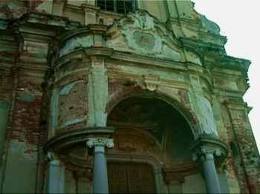
In the early days of 1124, the Marquis of Monferrato, Raneiro and his parents, Bernard and Ardizzone gave the land upon which the monastery to the abbot of La Ferte in order to enable him to form a new Cistercian Settlement. Also called the Bernardines or the White Monks, Cistercians are a strict Roman Catholic order with emphasis on manual labor and self-sufficiency. With the help of abundant additional donations, the monastery quickly became a vital part of the community, both as a religious presence and as a fecund agricultural compound.

For the next five hundred years, the abbey conducted itself with great comportment with involvement in the Crusades as well as benefices from such notables as the Marquis Boniface, Pope Pius IX, Pope Callistus III and Francesco II Gonzaga. But all that was to change in 1684.

Legend holds that in that year, many of the young girls of the surrounding village became instruments of the Devil, and their work for him was to corrupt the monks of the Lucedio Abbey. Perhaps through seduction, perhaps under the guise of spiritual guidance, the girls preyed upon the monks, turning them into active Satanists, converting their devout practices slowly into harmless rituals that eventually became sacrifices. From that moment on, the Abbey became the sight of debased humanity, a place of gruesome tortures, evil rituals, bloody murders, and even child molestations. A once holy place became a vortex of evil itself, one so malevolent, that word of the happenings reached the pope, Pio VI, who closed the abbey, in 1784, exactly one hundred years later. But by then…it was too late, the evil had permeated the very structure and there it remains, even today.

The Lucedio Abbey has been studied by numerous and varies paranormal groups, and all have come away with the same findings…shadows that move, pillars that weep, cries of anguish that feel the building and the heart with revulsion. It is in the Judgment Room where prisoners were once tied up to stand and await the fate of the Monks that the Crying Column stands, a pillar of stone that becomes wet (‘weeps’) for no reason or rhyme.

The mythology continues into the Crypt where, it is said, and evil spirit was imprisoned under the Church. But only the greatest of powers could keep it sequestered, powers held by the abbots themselves. Buried in an upright, sitting position they are stationed in a circle surrounding the believed vortex of the evil. In a bizarre twist, some sort of natural mummification took place and they are on guard even today, perhaps through eternity.

Additional strange occurrences include a strange mist or fog that inexplicably rises up and overtakes the Principato and bell tower. In the graveyard strange shapes, of the kind that people say represent the Devil, appear to dance upon and around the graves and stones. And in the church and the priest’s house, strange lights and sounds ring out at odd days and times.

In a land as ancient as Italy, this is but one of many such places, where remnants of previous lives have left their indelible ethereal impression upon the physical earth. As I set about to write historical fiction tales of the uniquely Italian sort, I cast my mind’s eye and my writer’s pen to the winds that carry such stories.

Wednesday, June 6, 2012

THE SWISS GUARD: FROM HOMELESS MERCENARIES TO REVERED WARRIORS

Rivaling the romanticized myth and legend of the Musketeers are those colorfully garbed Swiss Guard. We think of them now as the stalwart guardians who protect the Vatican, its people and its historic treasures. How strange it is then to look back to their genesis and find homeless men who were, in essence, killers for hire.

“The Helvetians are a people of warriors, famous for the valor of their soldiers,” so proclaimed Cornelius Tacitus, a senator and historian of the second century. Helvetia—the Latin name for Switzerland—is, as well, the name of the tribe from which the population grew. And grew it did, so large it fell under precarious economic conditions of an overpopulated land shrouded in poverty. Some 15,000 men looked to emigration for salvation and their skill as warriors for the profession.

This moment was to be the creation of a band of brothers as famous as any that ever existed. Developing a tactical form of combat unique in its style—sans cavalry or artillery—they fought in brief and yet victorious wars during the warm weather months, returning home with their pay and any ‘bonuses’ they may have garnered in the form of looting.

Their reputation grew and so did their patrons; the Swiss Guard fought for France, Spain, Vienna, Naples, Portugal and other, smaller actions. But it is as the Papal Guards, the Guardia Svizzera Pontificia, that they still exist and in which personification the world knows them, the “Defenders of the Church’s Freedom.”

Though there is evidence of an alliance between the Guard and Pope Sixtus IV dating to 1497, it is January 22, 1506 when 150 Swiss soldiers stepped foot on Vatican grounds and were blessed by Pope Julius II. The next few years found them fighting for the Holy See, as well as for other Italian States, but it was not until a fateful day in May of 1527 that their most valiant test came upon them.

It is here that I encounter the Guard in the Sack of Rome, in a pivotal moment in The King’s Agent. A dynamic combustion of varied warring political forces found Italy besieged, yet again, by the French. The attack on Rome, when it came on May 6, 1527, found the city poorly protected against the under paid, under fed forces of Charles, Duke of Bourbon, frustrated and irritable soldiers who took it upon themselves to feed upon the glory that was Rome. The city was looted; men, women, and children were abused and killed, and the Vatican itself was set upon and overtaken. Of the almost two hundred Guards that protected the Pope, all but 42 died. Yet it was this valiant, heroic effort that allowed the Pope to escape from the heart of the overrun Vatican City, through the Passetto di Borgo, to the temporary safety of the Castel Sant’Angelo.

Every year, on May 6, new recruits are sworn in to the Swiss Guard in commemoration of the soldiers’ bravery on that fateful day, accepting their duty with this oath:

"I swear I will faithfully, loyally and honorably serve the Supreme Pontiff and his legitimate successors, and also dedicate myself to them with all my strength, sacrificing if necessary also my life to defend them. I assume this same commitment with regard to the Sacred College of Cardinals whenever the See is vacant.

Furthermore I promise to the Commanding Captain and my other superiors, respect, fidelity and obedience. This I swear! May God and our Holy Patrons assist me!"