Wednesday, June 19, 2013

GUELPHS AND GHIBELLINES,
NERI AND BIANCHI,
DANTE AND BANISHMENT
THE MEDICI DYNASTY-The Series Continues

The brothers Charissio and Bonagiunta had settled well into their lives in Florence when last we visited with them. While both served their city and their government, subsequent generations lived modestly and unambitiously. As can be seen from the pictured portion of the family tree, not even their birth and death dates were noted.

Though no monumental contributions were made by these branches of the family tree, they were diligent, hard working, and ambitious. Through their work, partnerships formed and marriages made, these generations inculcated the family Medici more and more with life of Florence itself, gaining prestige and power bit by bit. But it would not always be an easy climb up the ladder.
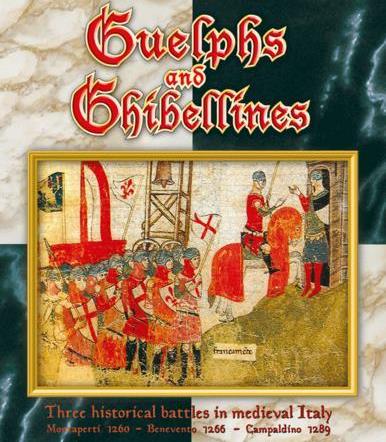
Coinciding with the estimated years of life of the last generation on this particular portion of the Medici family tree, it can be deduced that one or two were involved with the great conflict between the factions of the Guelphs and Ghibellines (quick background...the struggle between the Pope and the Holy Roman Emperor began in the 12th century; their two factions--those who fought for one side or the other--were called the Guelphs--for the Pope--while the Ghibellines were the Imperial party). It is an interesting point of trivia to note that the Montecchis were Ghibellines; the Capuletis were Guelphs--names more than reminiscent of Montague and Capulet. As a result of the Battle of Campaldino, the Guelphs would reign supreme in Florence, but they would not reign united.

There are theories that the Florentine Guelphs broke apart due to the level of Papal support each member supported. But there is another postulation, one far more entertaining and interesting, offered by none other the famous and infamous Nicolo Machiavelli himself. In his History of Florence he lays claim that the division between the Nera (the Blacks) and the Bianca (the Whites, the faction more opposed to Papal power) all began...because of children's spat. While both children were of the Cancellieri family, but of two different branches, cousins in fact. As the divisivness escalated, those who descended from Bianca came to be known as the Bianci; it was only logical for the others to adopt the moniker of the Neri.

"These two parts, Blacks and Whites, members of a family whose name Cancellieri, which is divided: for some relatives were called Whites, Blacks others, and so the whole city was divided."
( Dino Fellow, Chronicler of the things necessary in 'his time , Book I, 25)

From the childhood spat arose to one of deadly animosity.  At the head of the Bianchi stood Vieri de Neri faction. The so-called dead Scandal, vicolo dello Scandolo, a winding alley snaking between the Corso and Via degli Alighieri, was created in the fourteenth century to divide the properties of the two factions, to prevent them from destroying the interior walls connecting the two family homes and assaulting their enemy--their family--in the dead of the night.
'Cerchi, while Corso Donati led the

Donati and the Neri could name such high citizenry as the whole of the Pazzi, the Bisdomini, Manieri, Bagnesi, Tornaquinci, Spini, Buondelmonti, Gianfigliazzi, and the Brunelleschi. But other names, other influential families, lined up behind the Bianchi: the Adimari, the Abati, a part of the Tosinghi, of the Bardi, of the Rossi, of the Frescobaldi, of the Nerli, and of the Manelli; all the Mozzi, the Scali, Gherardini, Cavalcanti, Malespini, Bostichi, Giandonati, Vecchietti, and Arrigucci. There were two other names associated with the Whites, one being that of Dante and the other...Medici.

Violent ambushes, poisonings, accusations of witchcraft...the rift escalated. The Council of One Hundred, which included Dino Fellow and Dante Alighieri as a priori, decided to intervene, to confine the heads of the two factions in an attempt to cool tempers. The arrangement had no result, and Dante himself traced his intervention in the government to his downfall. 

More violence, and the involvement of the Pope and Charles de Valois of France found the Whites--Dante and the Medici among them--exiled from Florence. But for some, for those for whom evil is a in their core, good is never good enough. With the expulsion of the Whites, the Blacks began to turn in upon themselves and more violence erupted between Corso Donati and Rosso della Tosa. The city could take no more...Corso Donati was assassinated, the remainder of the Donateschi were expulged, and the political and social life of Florence began to return to normal once more. And new families began their rise.

While there is no confirmable history to say which of the Medici were involved and exiled, it is assumed from their marriageless and childless lives, and the most logical in terms of where they fall in the chronology of the family, the two most probable members were Amigo and Giambuono (marked with a red star on the family tree). And those these men fathered no children, their nephews were quick to take up the reigns of political involvement and ambition their uncles began. 

Monday, June 10, 2013

NEW YORK TIMES BESTSELLER
DEANNA RAYBOURN:
INSIDE THE WRITER'S STUDY

It's a pleasure to welcome the lovely and talented Deanna Raybourn to the Writer's Study. Her answers will find you nodding your head in agreement and raising your brows in surprise. Deanna is the award-winning author of nine books including the New York Times Bestseller The Dark Enquiry. So pull up a chair and your favorite beverage and spend a few delightful moments with Deanna...Inside the Writer's Study.


What is your favorite word?
Pleasure. It’s a suspicious word for lots of people, but I believe in making everything I do as enjoyable as possible. 

What is your least favorite word?
Obligation. See also drudgery, chore, and duty.

What turns you on?
Wit and kindness.

What turns you off?
Stupidity and small-mindedness.

What sound or noise do you love?
Mourning doves and rushing river water.

What sound or noise do you hate?
 Modern manmade sounds—vehicles, technology—but the absolute worst is the squeaking of athletic shoes on a basketball court.

What is your favorite curse word?
Bullsh!t.

What profession other than your own would you like to attempt?
There is no other one. A few centuries ago, I would have said Parisian salon hostess or courtesan.

What profession would you not like to do?
Anything medical.

If heaven or the after-life exists, what would you like to hear God, The Source (or whatever Deity you may believe in) say when you arrive at the pearly gates?
“Where would you like to go next?”

In one sentence, describe your newest or most recent release.
A SPEAR OF SUMMER GRASS is what happens when you put a disgraced flapper, an enigmatic man, and the spectacular setting of 1920s Africa into a cocktail shaker and give it a good jiggle.

To learn more about Deanna and her works, give her a visit at www.deannaraybourn.com

Thank you, Deanna!

Monday, June 3, 2013

FORKING: ITALIAN STYLE
SUMMER BANQUET HOP AND GIVEAWAY!

Summertime...windows tossed wide open; fresh resplendent air wafting in sweet with blooms bright and fecund; wind sluicing through lush trees as birds chirp their happiness at the warmth of the sun upon their backs; AND the freshest of food brought to the table in celebration. Welcome to the Summer Banquet Hop and join along as over thirty authors add their voice to the celebration... honoring summer, food, and the history of food related topics, each offering their own particular subject and theme, and their own giveaway offerings.

Italians have made extraordinary contributions to the culinary world, but none
may be as important as the fork. While ancient history shows that large, two tinned forks were used as a cooking utensil as far back as Ancient Egypt (~3000 BC), they can be found in the same capacity, some made of bronze and some of silver, through the Bronze Age of Qinghai, China to the Roman Empire. But it was in Italy that the fork made its way onto the table as an eating utensil.

Theodora Anna Doukaina (1058-1083), the daughter of Byzantine Emperor Constantine X, became the wife of Domenic Selvo in 1075, a man serving as Doge (ruler) of Venice from 1071 until 1084. While war raged in all corners of Europe, Domenic was a man of peace and civility, forging alliances which contributed to Venice's Golden Age, enhancing their stature as the center of European trade. Theodora's contribution to the evolution of civilization was the fork. She brought hers with her, to the table of Doge, and while many chided and denounced her for its use...for her haughty manners...the use of the fork slowly gained more and more popularity, especially on the tables of the noble and wealthy merchant classes. It was not long (historically speaking a few centuries) until everyone in Italy was...forking!

Through visiting dignitaries and diplomats, through marriages which brought such notables as Catherine de' Medici to the tables of other European countries, the fork made its way through the continent and into the hands of the people.

Thomas Coryat, an English traveler and writer of the late Elizabethan and early Jacobean age, gives a marvelous insight into the attitude of the fork as it made its journey. In his memoir of a European tour, one titled Coryat's Crudities: Hastily gobled up in Five Moneth's Travels, he wrote: 'because the Italian cannot by any means endure to have his dish touched with fingers, seeing all men's fingers are not alike clean. These 'little forks' were usually made of iron or steel, but occasionally also of silver.' Coryate says he 'thought good to imitate the Italian fashion by this forked cutting of meat, and hence a humorous English friend, in his merry humour, doubted not to call me furcifer, only for using a fork at feeding.' (The word fork comes from the Latin furca, meaning "pitchfork.")

But of course, Italians are not only famous for bringing the fork to Europeans tables, but they are as well, or more famously known for the delicious meals these forks were used to eat. It would be remiss to not include a recipe...one that can be found throughout Italian history dating back to the end of the Middle Ages all through to today's tables. It is a an Italian favorite: Vitello con Piselli (Veal and Peas)!

3 whole peeled and halved shallots
1 tablespoon garlic, minced
Pinch red pepper seed
Olive oil
1/2 cup white wine
1/2 cup chicken stock
1 cup veal stock
1 tablespoon tomato paste
1/2 cup sweet peas
1/4 cup fresh basil chiffonade
1 cup pea tendrils, plus more for garnish
6-8 small veal tenderloins
Oven roast the shallots until tender and caramelized. Set aside.
Sauté garlic and red pepper seed on medium heat with a little olive oil until garlic is lightly browned. Add roasted shallots to pan and deglaze with wine. Add chicken and veal stock, tomato paste. Reduce by half on high heat until thickened. Add peas, tendrils and basil. Simmer until tender.
Grill veal tenderloins to medium rare.
Divide tenderloins between two plates and top each with the savory demi glaze. Garnish with pea tendrils. Serves 2.

In honor of Summer, food, and the Summer Banquet Hop, I will be giving away a copy of my latest book, The King's Agent, set in Renaissance Italy (a recipient of a starred review in Publishers Weekly) as well as a copy of Italian Classics Cook Book. To enter, you must sign up as a follower to this blog. For additional chances to win, leave a comment on this post, Friend me on Facebook and follow me on Twitter (@DonnaRussoMorin). Buona fortuna e buona tavola (good luck and good eating)! This giveaway is limited to the US residents only.

Be sure to visit the other Summer Banquet Hop participating bloggers for more intriguing historical food posts and more giveaways!

Hop Participants
  1. Random Bits of Fascination (Maria Grace)
  2. Pillings Writing Corner (David Pilling)
  3. Anna Belfrage
  4. Debra Brown
  5.  Lauren Gilbert
  6. Gillian Bagwell
  7. Julie K. Rose
  8. Donna Russo Morin
  9. Regina Jeffers
  10. Shauna Roberts
  11. Tinney S. Heath
  12. Grace Elliot
  13. Diane Scott Lewis
  14. Ginger Myrick
  15. Helen Hollick
  16. Heather Domin
  17. Margaret Skea
  18. Yves Fey
  19. JL Oakley
  20. Shannon Winslow
  21. Evangeline Holland
  22. Cora Lee
  23. Laura Purcell
  24. P. O. Dixon
  25. E.M. Powell
  26. Sharon Lathan
  27. Sally Smith O’Rourke
  28. Allison Bruning
  29. Violet Bedford
  30. Sue Millard
  31. Kim Rendfeld

Wednesday, May 29, 2013

THE MEDICI: A TRUE DYNASTY
THE MIGRATION TO FLORENCE


When last we left the Medici, three generations had lived a comfortable life, a somewhat privileged life, in Mugello thanks to the fame of Medico di Petrone. But there would be born to the family one sprinkled with wanderlust. It is, then, to Chiarissimo di Medici that we go.

Born in 1167, Chiarissimo immigrated the short distance to Florence sometime in the 1180s. But It did not take him long to inculcate himself among the influential popolo of the city. Chiarissimo used his portion of the family wealth wisely, purchasing property near what is now called the Old Market, where the family would eventually become the undisputed lords of that segment of the bustling city.

But it was not just property in which Chiarissimo invested, and it was not just in real estate in which he wished to make his mark. He used his reserves of wealth to launch himself, and his family, as renowned money lenders. It began with a simple loan to Count Guido Guerra, who would later distinguish himself in the Battle of Benevento, earning himself mention in Dante’s Divine Comedy.

The loan that would bring Chiarissimo his own distinction was that which he made to the Camaldolite Abbey of Coltibono. An ancient monastery in need of severe repair least it suffer extinction, it was Chiarissimo’s loan—Medici money—which brought it back to its former glory. The act brought Chiarissimo membership on the city council in 1201. It was the beginning of the Medici's inextricable link with the governing of Florence. Though there is little known of Chiarissimo’s brother, Bonaguinta, not even his birth or death dates, there are records that show he too became a member of the city council in 1216.

These first steps…those made not only to Florence but as influential citizens of it…made by these brothers, would find even greater glory and fruition in the next generation, in their sons.

Wednesday, May 15, 2013

THE MEDICI: A TRUE DYNASTY
THE VERY BEGINNINGS; A SERIES BEGINS

Visconti, Sforza, Gonzaga…these are the names of some of the most powerful families, the most influential Houses, in the history of the Italian peninsula. But no such list would be complete without mention of the House of Medici, for there was no family as powerful or influential. Howard Means in his book, Money & Power: The History of Business states that the Medici were, “the greatest banking dynasty of its time and perhaps the most influential non-royal family in all of European history.”

While many consider the power of the Medici originated with Cosimo I, often called Cosimo the Elder, the patriarch of the family in the early 15th century, the true roots of this vitriolic and vital family begin much farther back, and it is there this story begins.

Considered the oldest ancestor of the House of Medici, the name of the lineage finds its genesis with this man as well. Though his true name has been lost to the vagaries of history, the man known as Medico di Petrone was born in 1046. Serving as the Lord or overseer of the territory of Petrone, “a fortified place since destroyed, and of which there only remains the church,” (Illustrations of the Life of Lorenzo De' Medici by William Roscoe, Thomas James Mathias). Medico served on behalf of the Ubaldini, the true Lords of Mugello (a territory a few kilometers north of Florence), Medico was also a physician of sorts, said to possess miraculous powers of healing. Such men were called ‘doctors,’ or, in Italian, medici.

According to genealogists of the age, those that used the stars, planets and moons as their divining tools, Medico di Petrone was a descendant of the illegitimate line of Charlemagne. His miraculous healing powers served to confirm such heritage; it was a belief widely held up to and including the Middle Ages, that healing abilities were proof of royal descent. Such belief no longer holds any credence. Nonetheless, it set the family on a path of greatness, one that would live up to its destiny, both famously and infamously.

The next three generations of the Medici family would live in relative obscurity historically speaking, but it would not be long before the family was thrust into the limelight once more, before their indelible imprint on Italy would begin to take shape. It should be noted that among most genealogical sights, prevalent theory lists Medico di Petrone as ‘possibly Lady Diana's 26-Great Grandfather, Louis XVII's 20-Great Grandfather, HM Juan Carlos' 25-Great Grandfather or Philippe of Belgium's 26-Great Grandfather.'

Thursday, May 9, 2013

ANNE EASTER SMITH:
INSIDE THE WRITERS' STUDY

English born American Anne Easter Smith is the award-winning author of A Rose for the Crown, Daughter of York, The King's Grace, and Queen by Right. It's an honor to welcome her to Inside the Writers' Study.

What is your favorite word?
Friend

What is your least favorite word?
Tolerant--it’s so negative and condescending

What turns you on?
Laughter

What turns you off?
Political ads 

What sound or noise do you love?
Crickets--it means summertime to me 

What sound or noise do you hate?
Sirens 

What is your favorite curse word?
Bugger 

What profession other than your own would you like to attempt?
Theater director 

What profession would you not like to do?
Nurse

If heaven or the after-life exists, what would you like to hear God, The Source (or whatever Deity you may believe in) say when you arrive at the pearly gates?
All your friends are here 

In one sentence, describe your newest or most recent release
My “Royal Mistress” is Jane Shore, Edward IV’s favorite and final concubine, whose ready wit and allure captivated the three most powerful men in London at the end of the Wars of the Roses.

To learn more about Anne and all her amazing work, please visit her website: Anne Easter Smith

Tuesday, April 30, 2013

INSIDE THE WRITERS' STUDY
A NEW SERIES BEGINS

As a fanatical movie devotee, I have concurrently been a huge fan of Inside the Actors Studio since its inception in 1994 with its first guest, Paul Newman. The charming and enigmatic James Lipton, the host of the show, is as captivating and entertaining as the myriad actors he interviews in a very different format than found on normal talk shows, giving a greater look at the performers' work and greater insight into their true selves.

I have always been delighted by a series of questions posed to every guest at the end of the regular interview segment. James Lipton has always given credit for the questions to the French television personality Bernard Pivot, who used them on his show, Apostrophes. But that is NOT where the genesis lies; it resides, rather, in the hands...of a writer!

As it turns out, Bernard Pivot developed this set of questions from a questionnaire answered by the French essayist and novelist Marcel Proust. Proust originally answered this questionnaire while still in his teens, in a 'confession album,' a type of autograph book popular in the late 19th century. The title of that which Proust wrote in is self-explanatory; it belonged to his friend Antoinette (daughter to a future French president) and was entitled "An Album to Record, Thoughts, Feelings, Etc." It has since become a tool for an artist to reveal aspects of themselves and their work outside of the normal 'interview' format. It's modern evolution has been used to reveal the inner depths of the respondent. 

How overjoyed I was to find these questions belonged, first and foremost, to a writer. And back into the hands of writers it will go. Inside the Writers' Study will become a regular feature here and will highlight bestselling and award winning historical fiction authors from around the world.

And, what sort of hostess would I be, were I not to put myself to the task to start off the series. Therefore, here I am...Inside the Writers' Study:

What is your favorite word:
Joy

What is your least favorite word:
Can't

What turns you on:
(Besides men dressed as Musketeers...)...the belief that ANYTHING is possible.

What turns you off:
Judgmentalism 

What sound or noise do you love:
(For all parents, including myself, the sound of our children's laughter is a given, even though mine are grown men, otherwise...)...the sound of wind sluicing through a tree lush with summer leaves.

What sound or noise do you hate:
A phone ringing

What is your favorite curse word:
When my children were young it was Son of a Biscuit. Now that they're grown men it's Son of a f--king b--ch! (Oh, the times they are a-changing!)

What profession other than your own would you like to attempt?
Actor

What profession would you not like to do?
Dentistry, anything to do with dentistry


If heaven or the after-life exists, what would you like to hear God, The Source (or whatever Deity you may believe in) say when you arrive at the pearly gates?
Come on in; I'm ready to answer all your questions.

(And exclusive to Inside the Writers' Study)
In one sentence, describe your upcoming or latest release:
Francois I's Italian art thief--The King's Agent--and a mysterious woman embark on a quest across Renaissance Italy in search of a painting presumed to possess mystical abilities.
The King's Agent on Amazon

I hope you enjoyed this first edition of Inside the Writers' Study and I hope you'll return again and again for upcoming editions. Keep a look out for Anne Easter Smith, Beverly Swerling, Lauren Willig, Maryanne O'Hara, and many more!